A console soul for gaming PCs
PlayOS is an open-source operating system that gives gaming PCs a console experience — starting with handhelds, and coming to Intel PCs with AMD and NVIDIA GPUs. Built for a controller, booting straight into your games, and designed so the system takes care of itself.
A console, not a desktop
No desktop, no windows, no package manager. PlayOS boots into a game library you can drive entirely with a gamepad.
Your data, protected
The system image is read-only and updates are A/B with automatic rollback. Your games, saves, and settings live on a separate writable partition.
Games stay untrusted
Every game runs in a sandbox with no access to the rest of the system — a broken or malicious game cannot wreck your device.
What players get today
Everything here is running on real hardware now — the ASUS ROG Ally is the first reference device, with Intel graphics brought up on the ASUS ZenBook UX530. Intel PCs with AMD and NVIDIA GPUs are on the way.
Controller-first everything
The library, settings, and the in-game menu are all built for a gamepad. Pick up the controller and leave the keyboard in the drawer.
Boot straight into your games
No desktop, no windows, no setup. PlayOS boots into your game library in seconds and gets out of the way.
Fast, direct graphics
A native compositor draws games straight to the display with zero-copy scanout — measured 100% direct on the ROG Ally.
A system that protects itself
Read-only system image, A/B updates with automatic rollback, and every game sandboxed. A bad update or a bad game can't wreck your system.
Audio, power, and Wi-Fi handled
ALSA audio with proper device routing, battery and thermal status, suspend, and a built-in Wi-Fi stack — the OS does the chores.
Games from any engine
PlayOS exposes one stable C API — libplayos — that any engine or toolchain can target. The SDK ships with a ready-to-use toolchain and raylib.
Straight from the ROG Ally
Unedited captures from a working ASUS ROG Ally running the current build — no mockups, no renders.
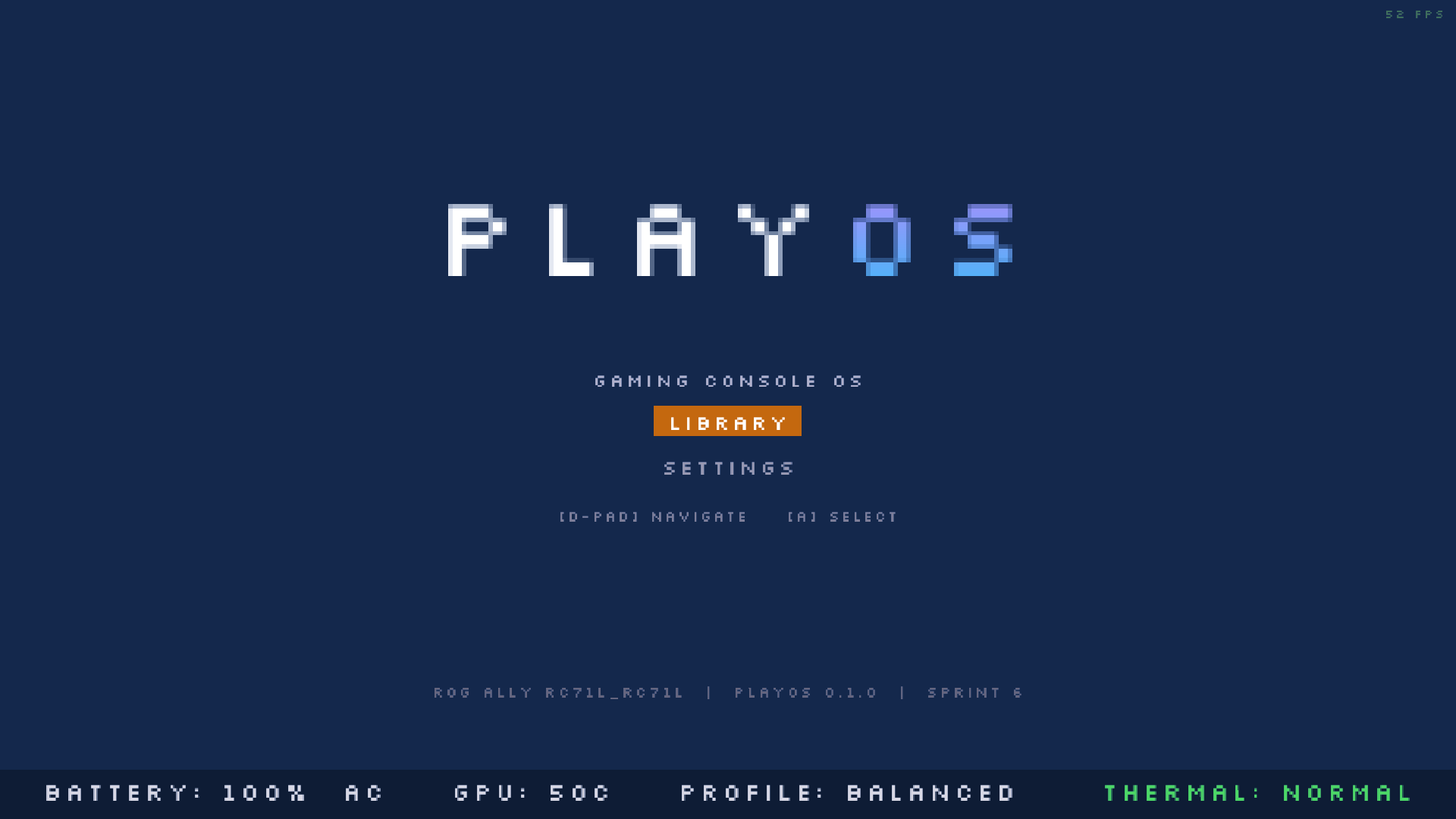
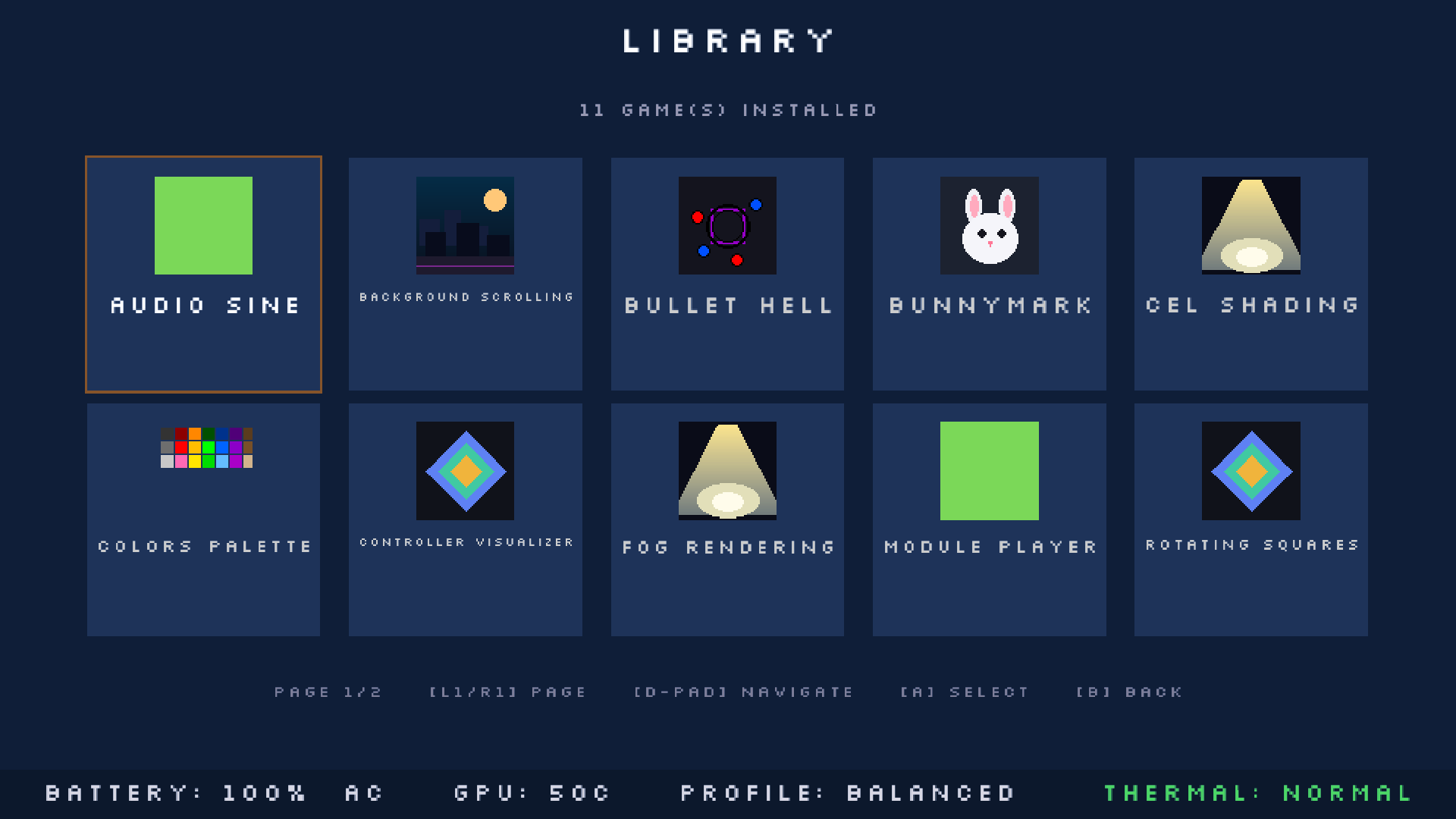
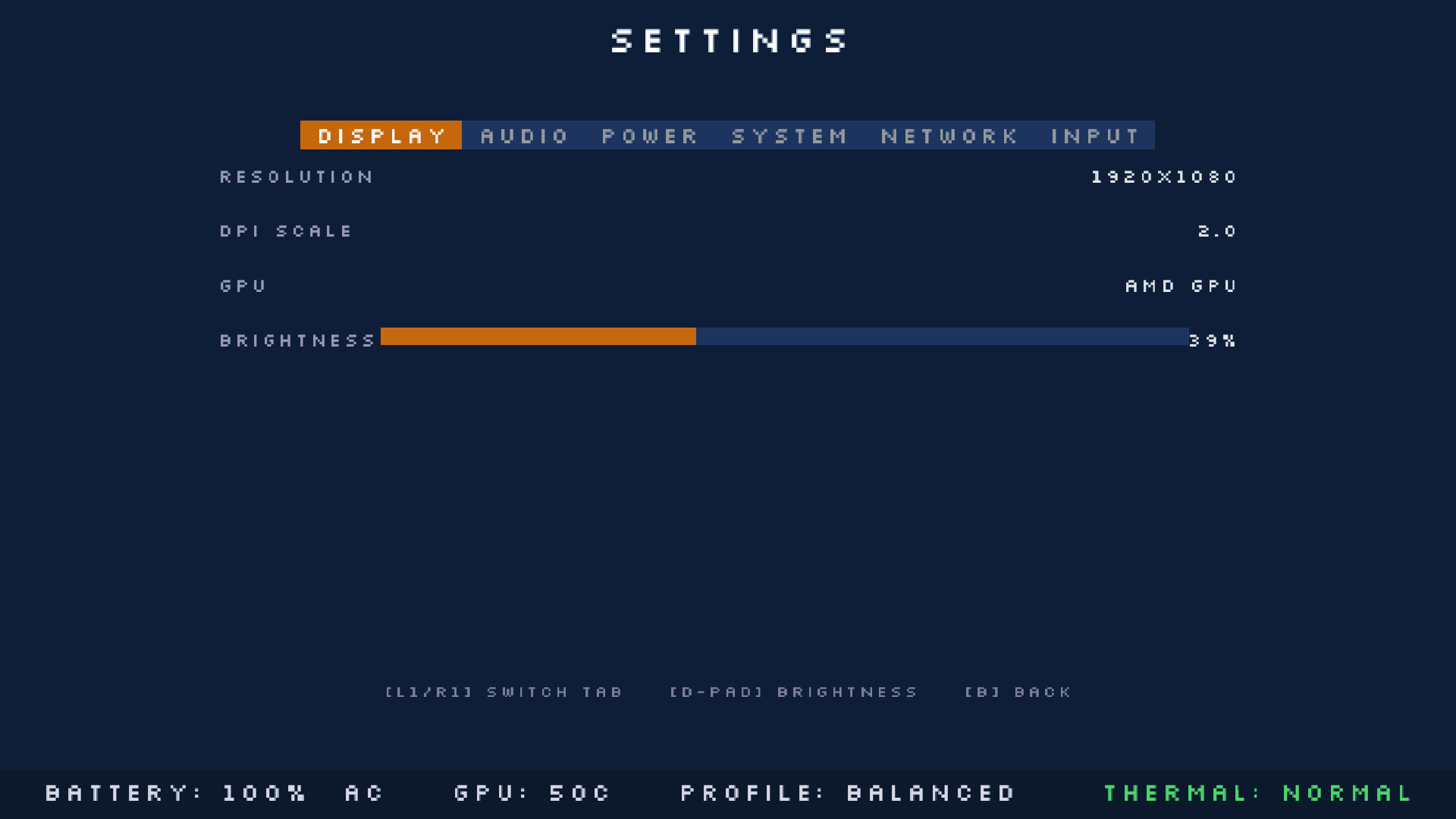
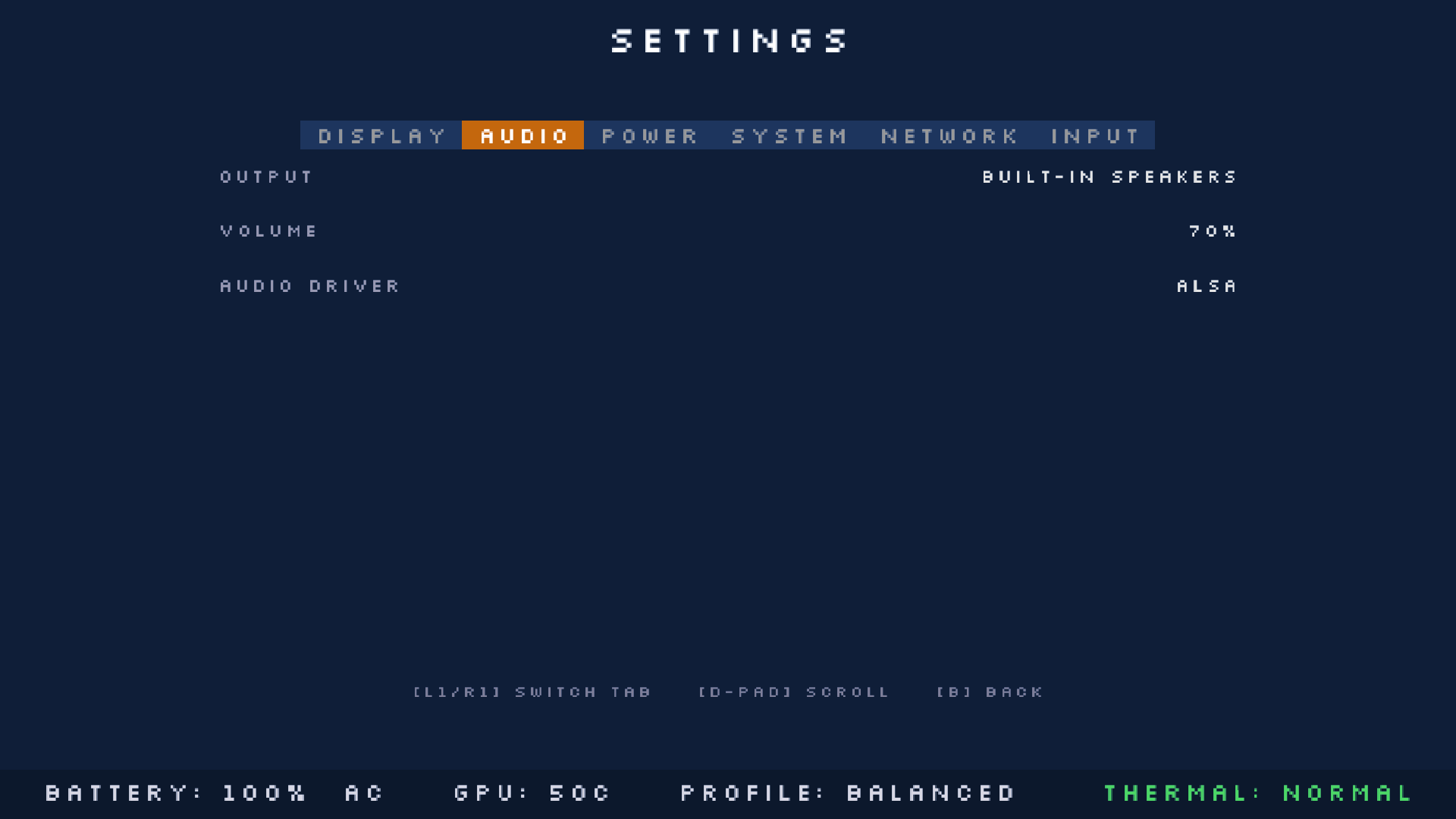
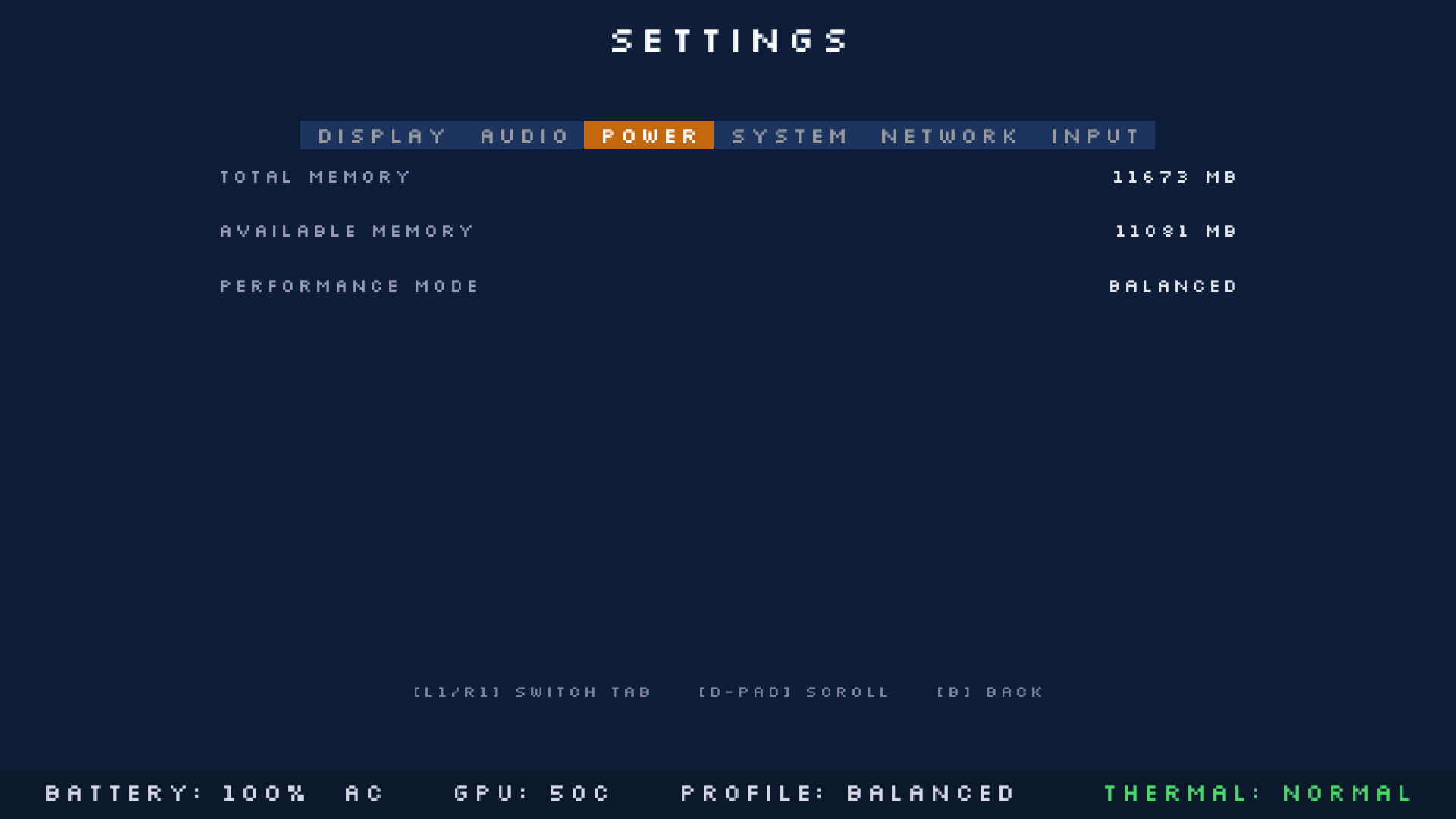
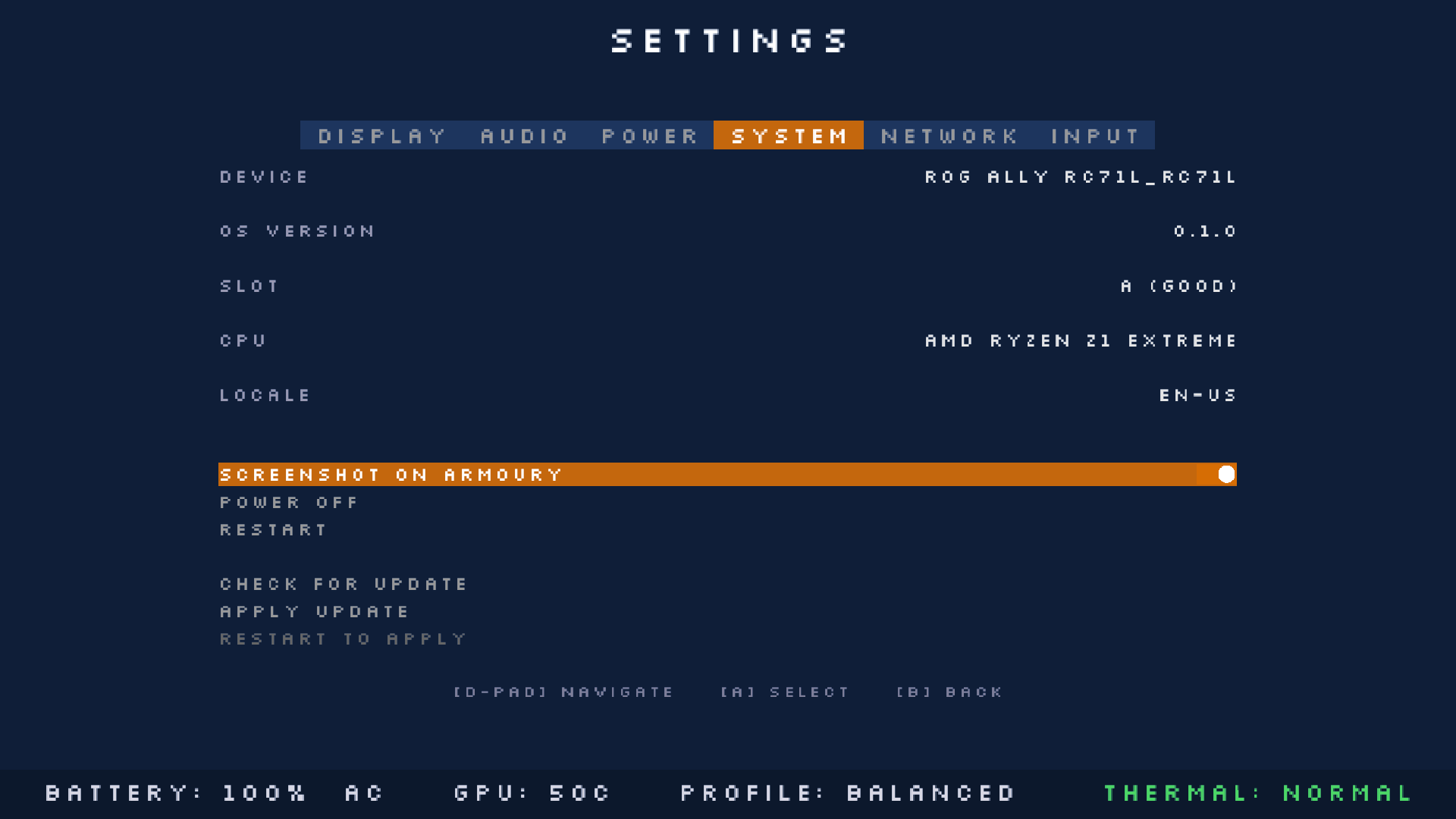
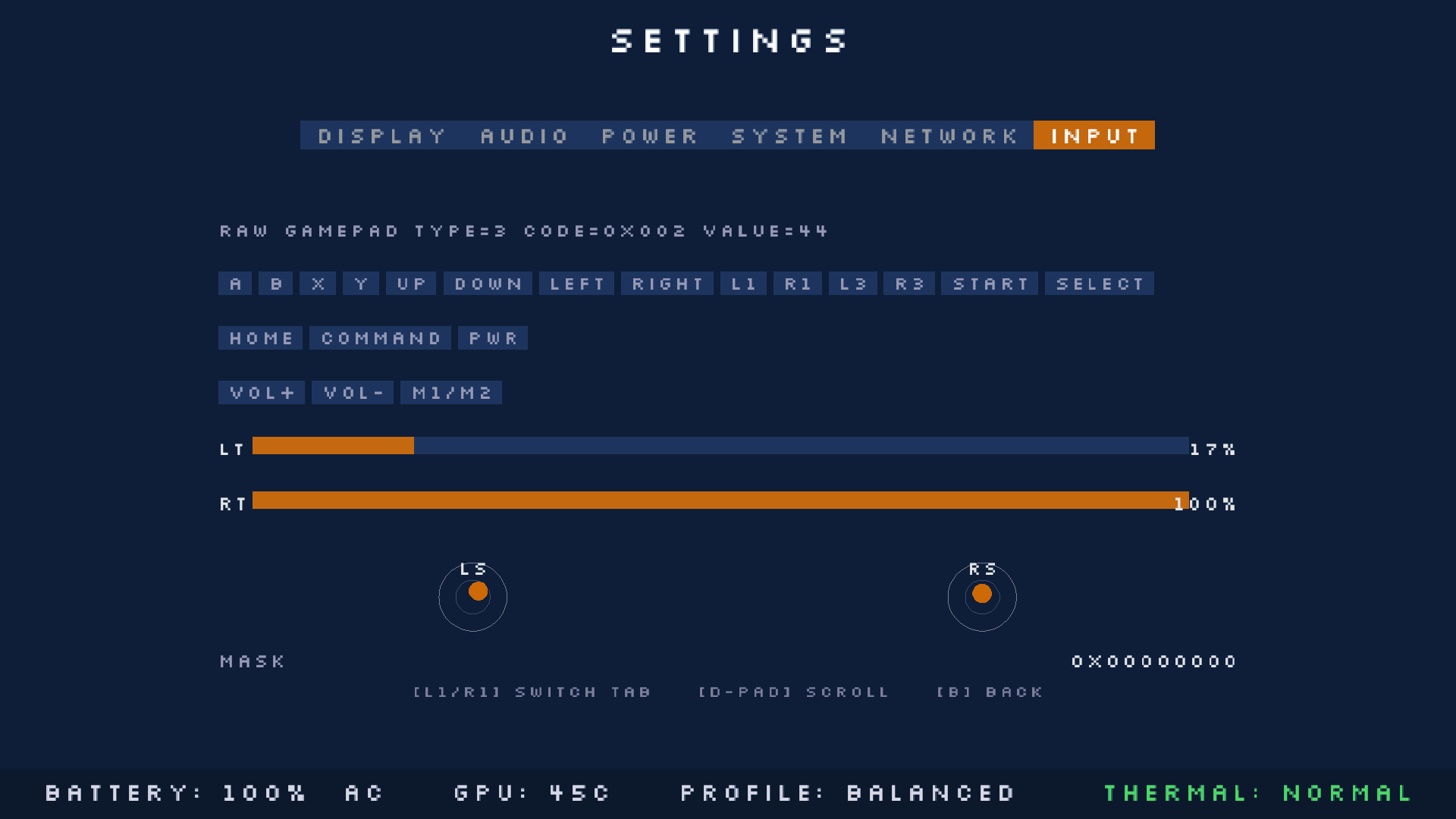
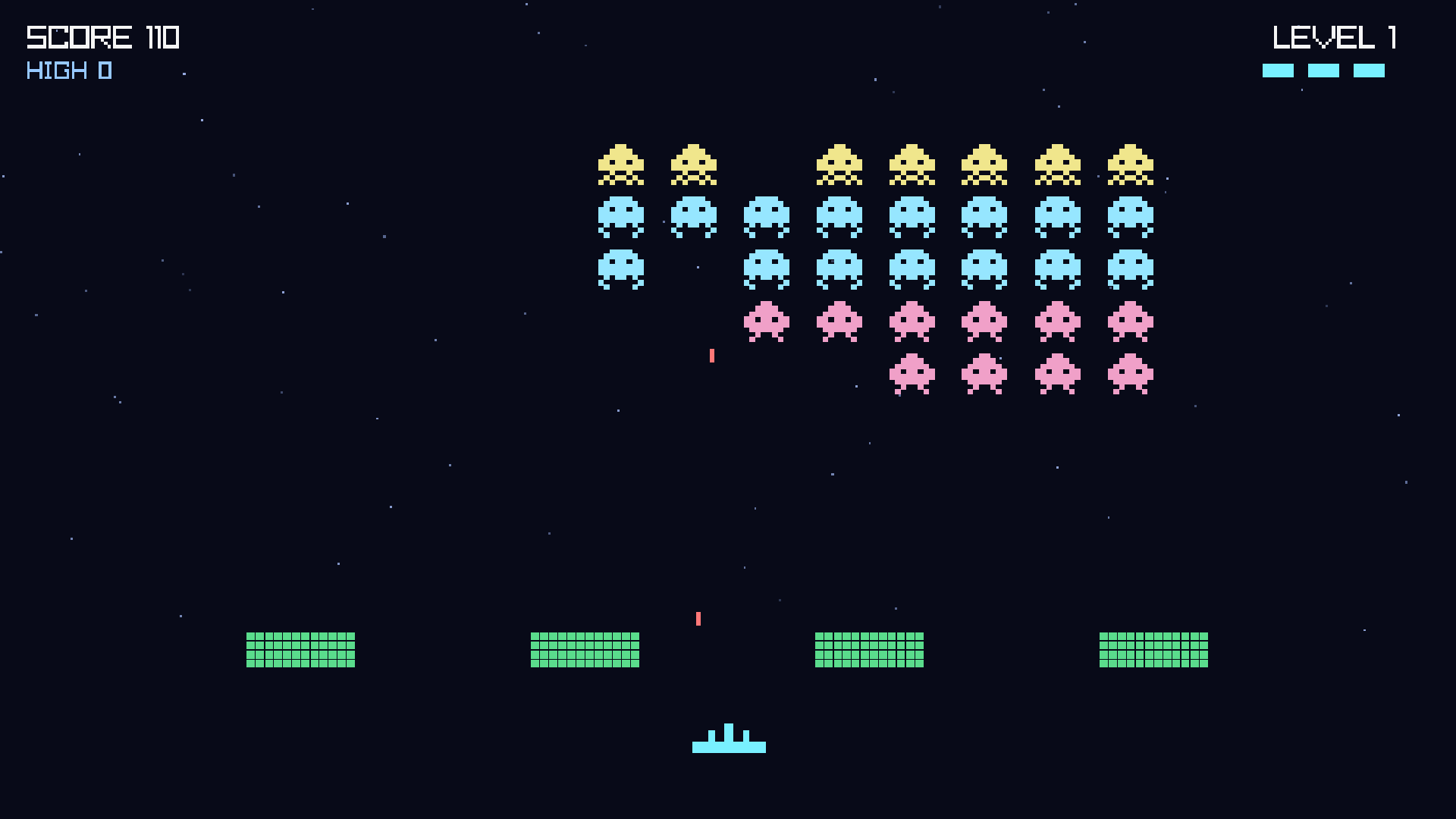
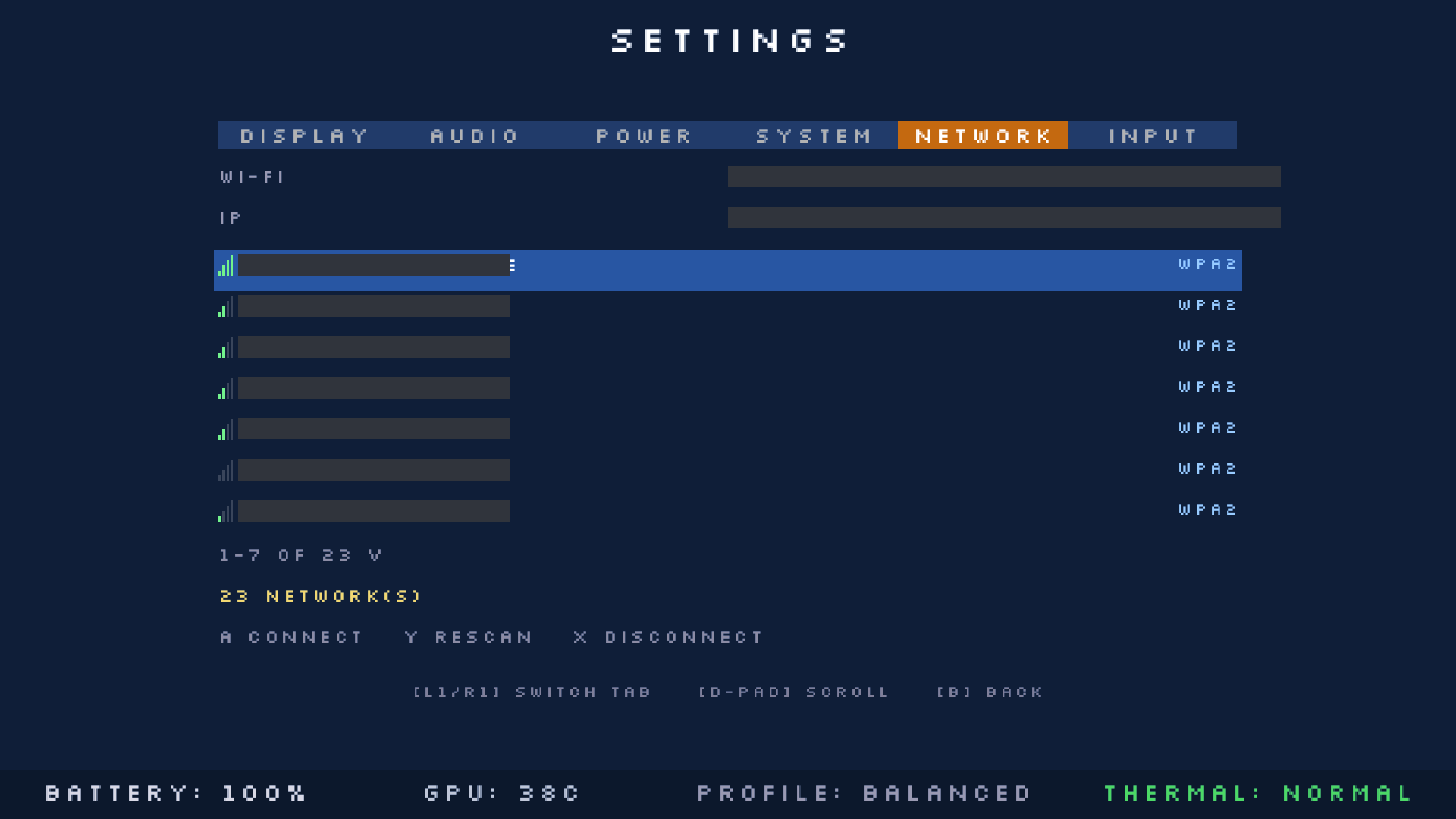
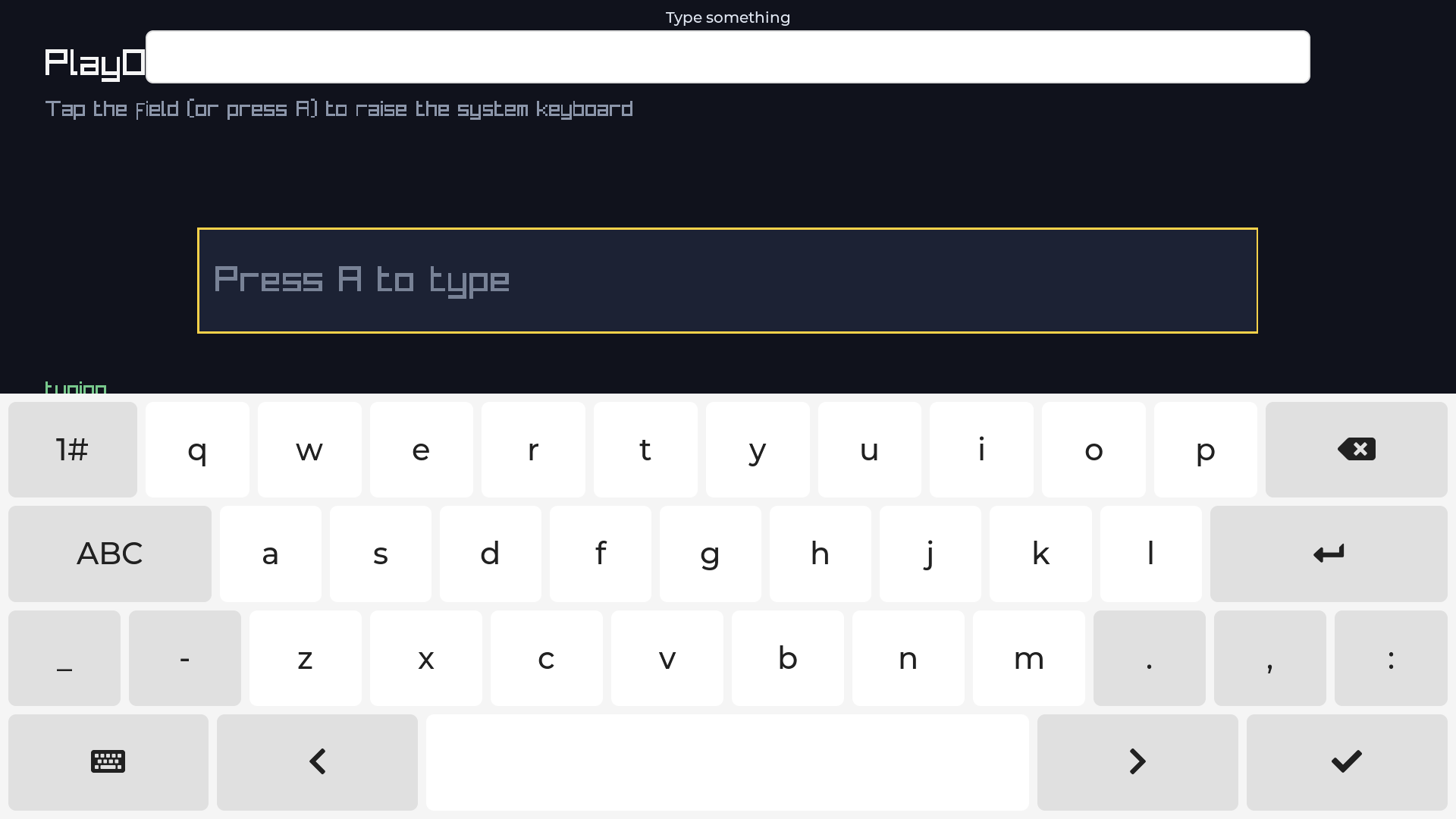
Captured on the ASUS ROG Ally (2023) · 1920 × 1080
Where the platform is going
These are the services PlayOS is building toward. None of them are live today — and when they arrive, they will stay optional: a device without an account will keep working, offline play always works.
Local profiles
Per-player profiles on one device — separate saves, settings, and screenshots for everyone who shares a handheld.
PlayOSUniverse accounts
One online identity for PlayOS, linked from your device with a short code. Your account will follow you, never lock you in.
PlayOS Marketplace
Discover and install games packaged as signed .gpk bundles, with free content available to every device.
Cloud saves
Your progress will follow you between devices — and local saves keep working offline, always.
Achievements & trophies
Unlock achievements in games and keep them on your PlayOSUniverse account.
Leaderboards & online play
Compare high scores and play with friends — with local multiplayer always available offline.
Self-publish to the PlayOS Marketplace
PlayOS is being built so developers can self-publish on their own terms. The marketplace is specified but not live yet — when it ships, publishing will be SDK-first, self-hostable, and open.
SDK-first publishing
Package and sign your game as a .gpk with the PlayOS SDK — publish without owning a device.
Your store, your rules
Official, community, OEM, and LAN stores will all serve the same open catalog contract — self-host on any static host.
Signed, then sandboxed
Every package will carry a platform signature for integrity, while games keep running in the untrusted sandbox.
Free content first
Marketplace v1 will be free content only — no payments, no billing, no DRM. Publisher accounts will be granted separately from player sign-up, with publisher onboarding coming later.
Built in the open
Every part of PlayOS is open source under the PlayOS Foundation. Games target one stable C API — libplayos — and the reference SDK ships as a relocatable musl toolchain with raylib.
- Linux is the hardware layer, not the product.
- The system image is immutable; only the data partition is writable.
- The compositor permanently owns DRM/KMS — no handoffs to games.
- One game runs at a time; the shell always stays alive.
- Games target
playos-platform-api; they never touch compositor or kernel internals.